

The forgotten history of the motor torpedo boats: Part II
This story was written for Defensiekrant, the Dutch military newspaper. It is my third contribution to the weekly paper, you can find part one on this blog. The original version of the article was published on 24 October 2025 and can be found here (in Dutch).
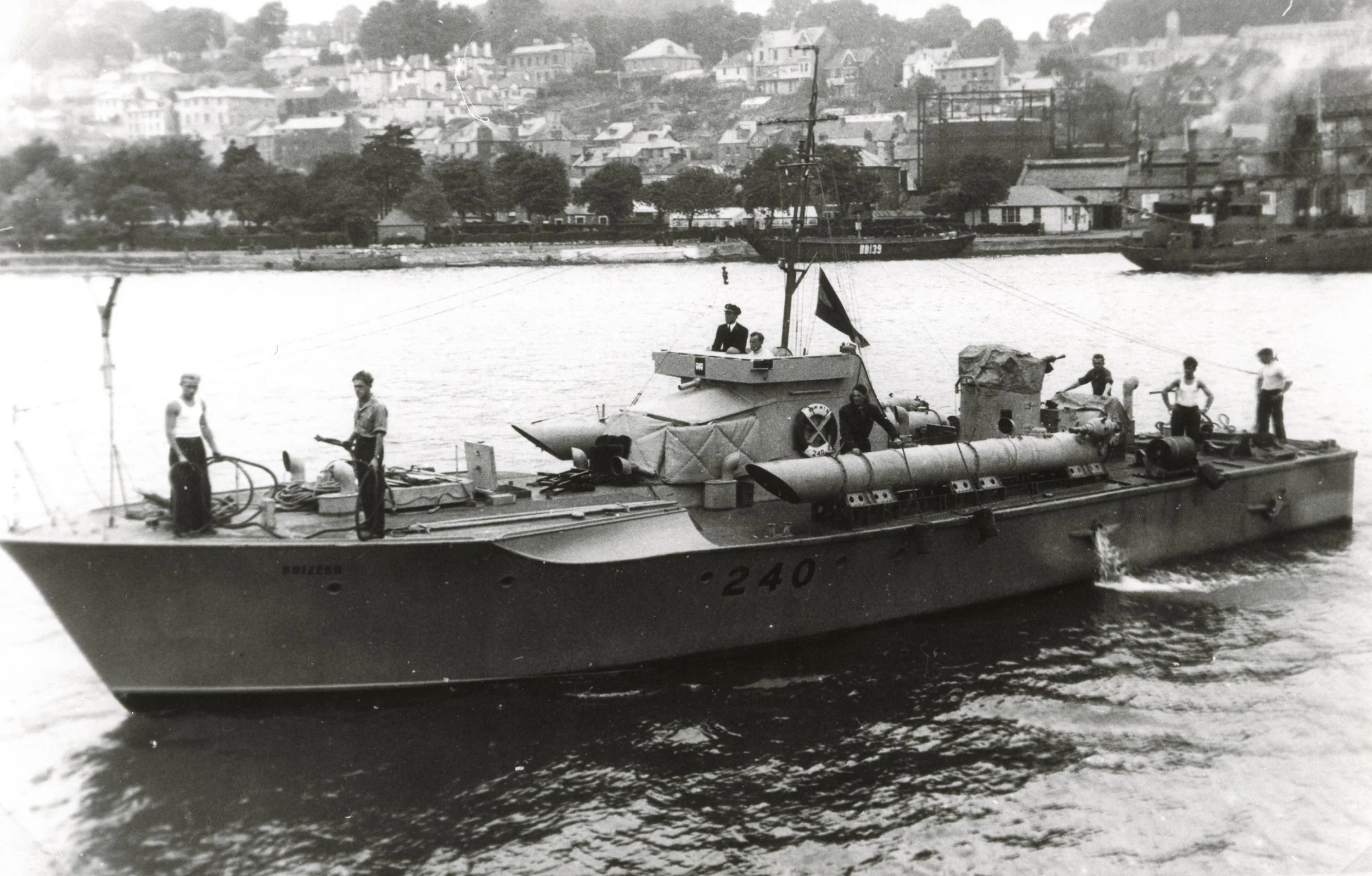
"Motor torpedo boat HNLMS MTB 240 enters the harbor of Weymouth."
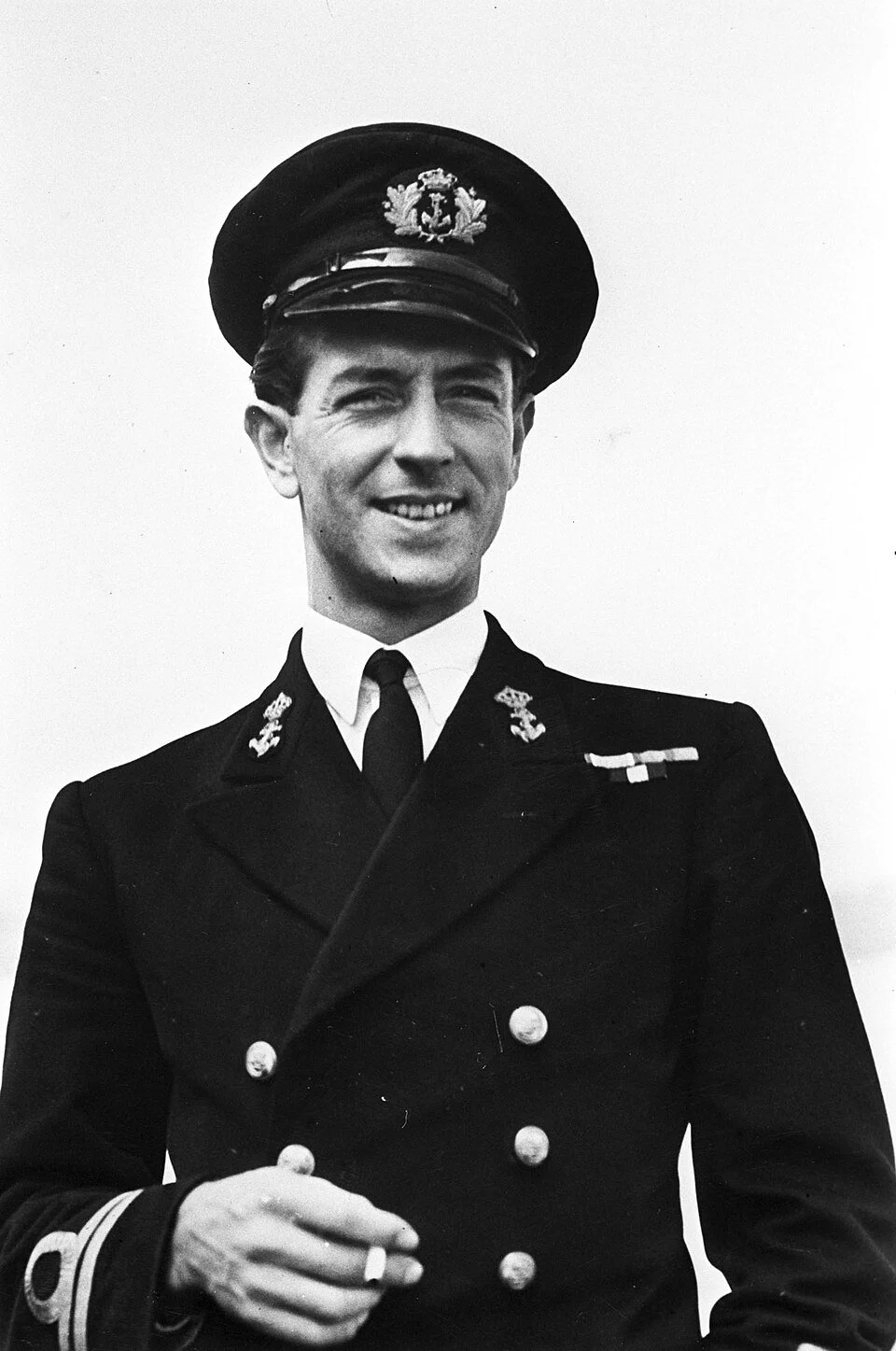
Hans Larive
"Hans Larive, Knight of the Military William Order, as a lieutenant junior grade in the navy, escaped from the German prisoner-of-war camp in Colditz. He later became commander of the Motor Torpedo Boat Service."
These so-called Engelandvaarders — “England sailors,” Dutch escapees who reached Britain during WWII — were among the first members of the newly forming Dutch armed forces. A large number of them ended up in the Second and Ninth Motor Torpedo Boat Flotillas.
“You felt warm and fortunate to be part of a community with men like that. Men who would literally go through fire and water for each other, defying death. There was drinking on those boats, heavy drinking; so what, tomorrow it could all be over.”
Lieutenant Hans Larive wrote this in his biography “Vannacht varen de Hollanders” (“Tonight the Dutch Will Sail”). It gives a good impression of the atmosphere among the close-knit crews of the Motor Torpedo Boat Flotillas — the old Dutch term for a fleet. They were stationed in the English port towns of Dover and Ramsgate. At that time, Larive was the commanding officer of HNLMS MTB 203. Later, he would take command of the entire Dutch motor torpedo boat fleet. But let’s start at the beginning.
Success
Only two days after the Dutch capitulation on 15 May 1940, a new naval staff is formed in London. It determines how the Royal Netherlands Navy can contribute to the war against Nazi Germany. In this, an important role is reserved for HNLMS TM 51.
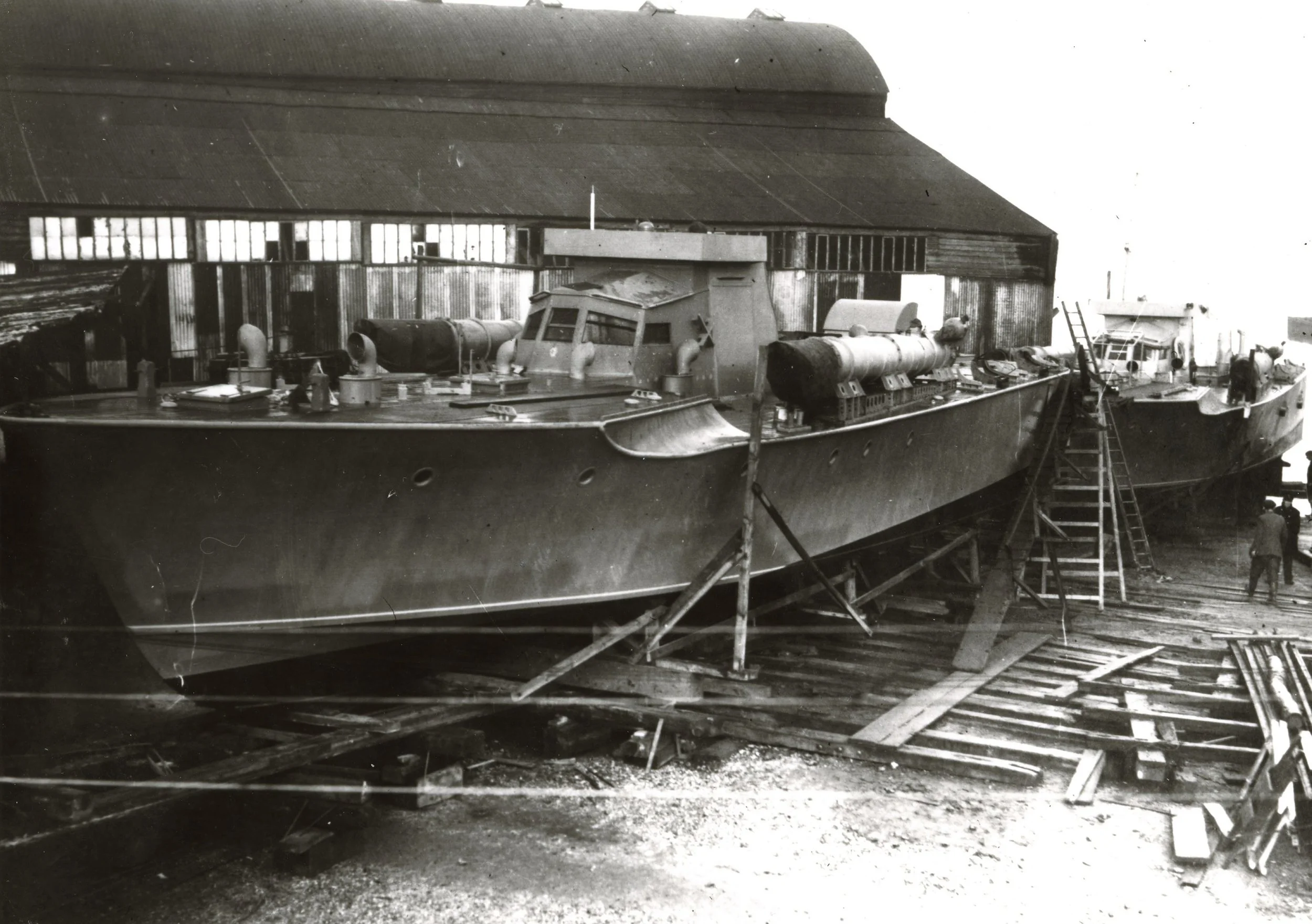
Motortorpedoboot Hr.Ms. MTB 235 in aanbouw bij Vosper in het Engelse Portsmouth.
After crossing from the Netherlands, this ship is transferred to the British Navy. In 1941, the vessel returns to Dutch control, but under its new name: HNLMS MGB 46. During the night of 11 to 12 September 1941, this boat, together with its British counterparts, attacks a German convoy. They inflict significant damage on the enemy without suffering casualties themselves. This success plays an important role in the decision of the Dutch naval command to purchase torpedo boats more quickly. These vessels are relatively inexpensive and capable of operating off the Dutch coast.
MTB or MGB?
The newly acquired vessels enter service with the British Coastal Command and are assigned to the Second and Ninth Flotillas. There are two types of ships: the Motor Torpedo Boat (MTB), armed with torpedoes, and the Motor Gun Boat (MGB), armed with heavy machine guns. The MGBs must provide cover for the MTBs when they carry out torpedo attacks. The British boats are also equipped with Radio Direction Finding — an early version of radar. The MTBs are stationed in Dover, and the MGBs in Ramsgate.
On the other side of the North Sea, the Germans have the Schnellboot (S-boat). These are much larger and equipped with torpedoes and heavy machine guns. The S-boats are a formidable opponent. They are armored, while the British boats are made entirely of wood. In addition, the British vessels run on highly flammable petrol, while the Germans use diesel engines.
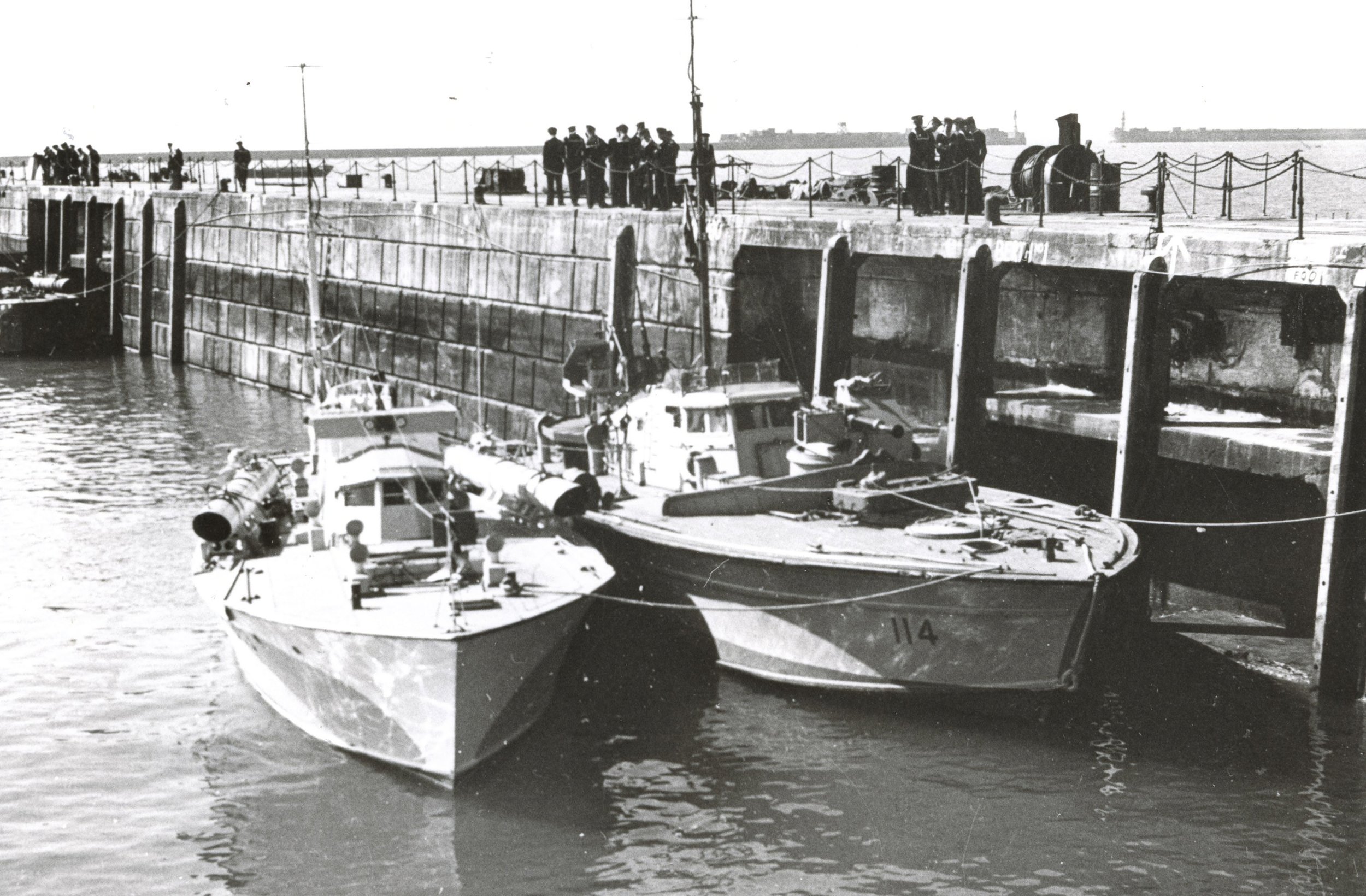
"Motor torpedo boat HNLMS MTB 203 with on the right motor gunboat HNLMS MGB 114."
The war
Motor torpedo boats were built by various shipyards scattered across England. Because of this, it took some time before all the vessels were assembled for the Dutch Navy. Meanwhile, the future crews were trained in Fort William, Scotland. They arrived in Dover on 22 May 1942, and for the rest of the war, this small town would be their home.
The bleak port city was one of the most heavily bombed places in England. Since Dover lies only 33 kilometers from France, it was even within range of German artillery. It took the crews some time to get used to their new environment. In the old Lord Warden Hotel — renamed HMS Wasp — they had to endure nerve-wrackingly long waits before they were finally allowed to go into action.
The crews were on call every night, which was when the German navy was most active. As soon as British reconnaissance aircraft or radars detected something, the Dutch were sent out to sea. This happened frequently, but on the night of 26 to 27 September 1943, they achieved their greatest success.
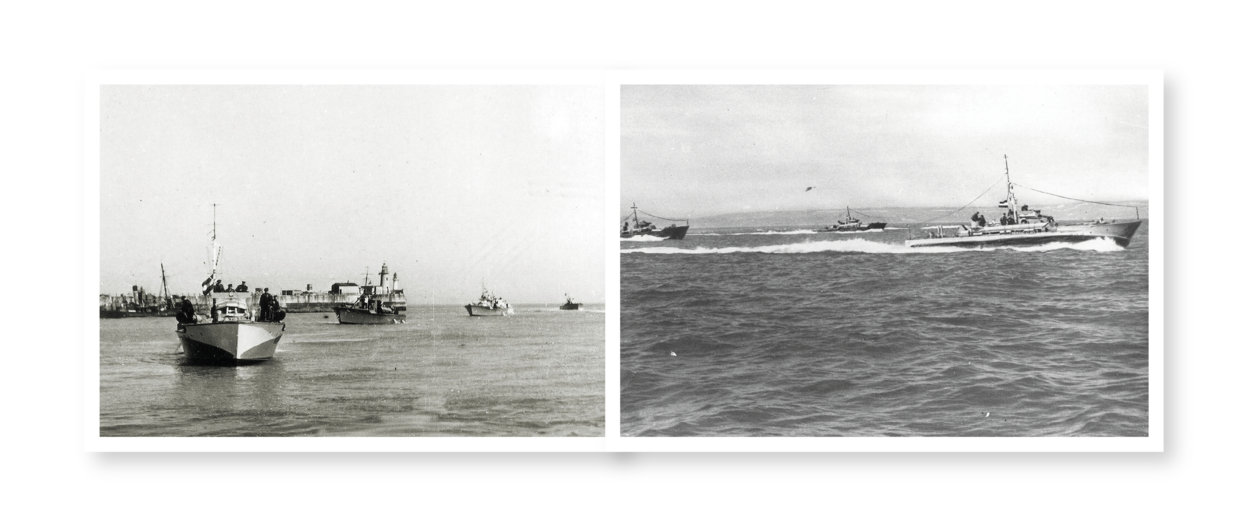
"Left: Motor torpedo boat HNLMS MTB 204 and other MTBs entering the port of Dover. Right: HNLMS MTB 204 leading a flotilla of MTBs in the Channel."
Maneuver
That night, Larive sends the MTBs toward a German convoy at thirty miles per hour. They charge straight through a rain of tracer fire and directly through the defensive line. Thanks in part to a well-executed diversion by a group of MGBs on their flank, the motor torpedo boats slip past the enemy’s attention.
Suddenly, the boats find themselves positioned between the French coast and the convoy. The engines are shut off, and an eerie silence falls. The Dutch allow the enemy ships to pass before them like a parade, then restart their engines at full power. Like a pack of wolves, the MTBs close in on the ships to within only eight hundred meters.
Then the signal comes: “Fire!” The three boats launch their torpedoes, and it doesn’t take long before a bright flash becomes visible, followed by dark smoke rising from a large German tanker. There is no time for emotional release, however. The boats turn sharply and race away at maximum speed. Every gun in the convoy now opens fire on them, but at that moment the MGBs spring back into action. With covering fire and a thick smoke screen, the Dutch secure their retreat. By the end of the night, the Germans have lost three ships — all without any losses on the Dutch side.
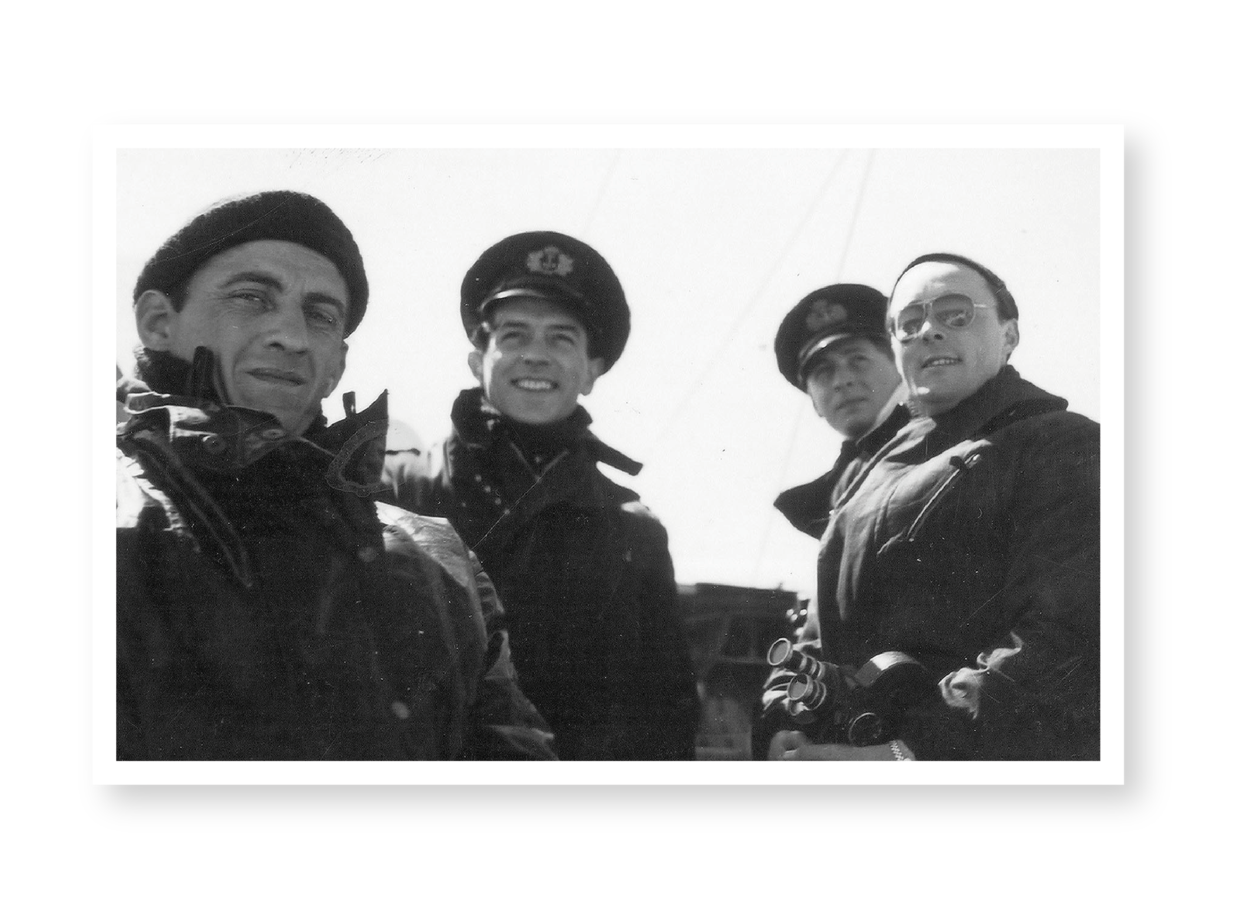
"Prince Bernhard visiting the Motor Torpedo Boat Service. The second man from the left is Lieutenant Junior Grade Hans Larive."
Frustration
As gradually as the Motor Torpedo Boat Service began, its existence ended just as abruptly barely a year after the memorable action. Although the MTBs had still been in combat with the Germans only a few days earlier, on 5 September 1944 they were suddenly ordered to cease fighting. Larive was instructed by the Admiralty to make 180 men available as soon as possible for a harbor detachment in the soon-to-be-liberated Netherlands.
To the great frustration of the naval officers, they were ordered to disband the service immediately. In his biography, Larive writes: “Gone, the MTB service. After two and a half years of hard work… all gone! For us, the war was over. A few hours earlier we had sunk two ships and now… the game was up.”
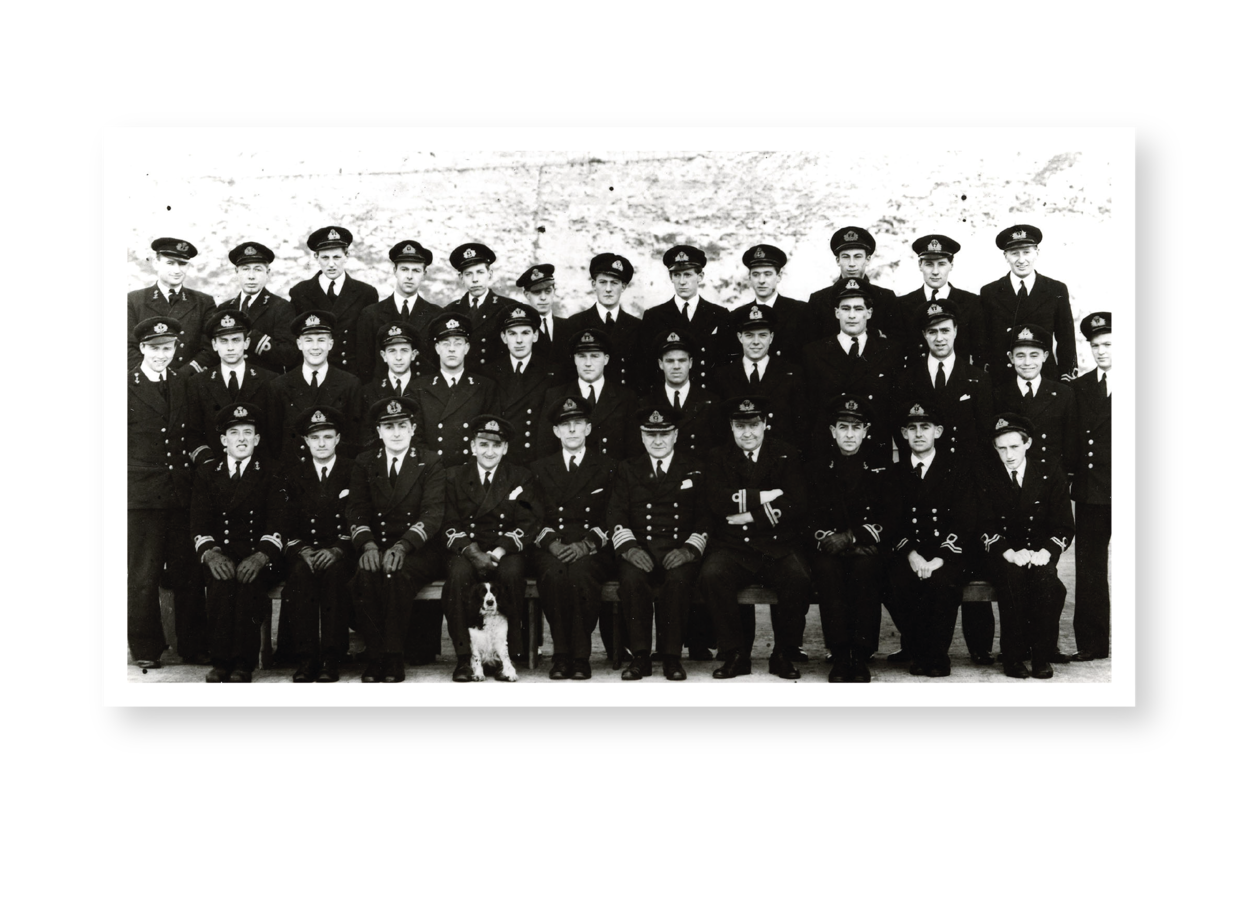
"British and Dutch motor torpedo boat officers posing on the roof of the MTB bunker in Dover. In 1944, the cooperation came to an abrupt end."
Curious about the MTBs?
Today, only a handful of MTBs and MGBs can still be admired in real life — almost all in one place: Boathouse 4 in Portsmouth. In the museum, volunteers work on maintaining and restoring all kinds of small naval vessels. With immense dedication, the team manages to keep the ships operational. This is essential, because the old boats are made entirely of wood and would not survive long on land due to the risk of drying out and wood rot.
The ships originally had a life expectancy of only about four years. They were built with that in mind, explains supervisor Diggory Rose. It therefore takes considerable effort from Rose and his team to keep the vessels afloat. “Maintaining and sailing these ships requires years of experience. It has happened that parts of the wooden structure came loose during a voyage. Then you throttle back and, above all, keep a cool head. Everything creaks and groans on these boats. But that’s what makes them so special.”
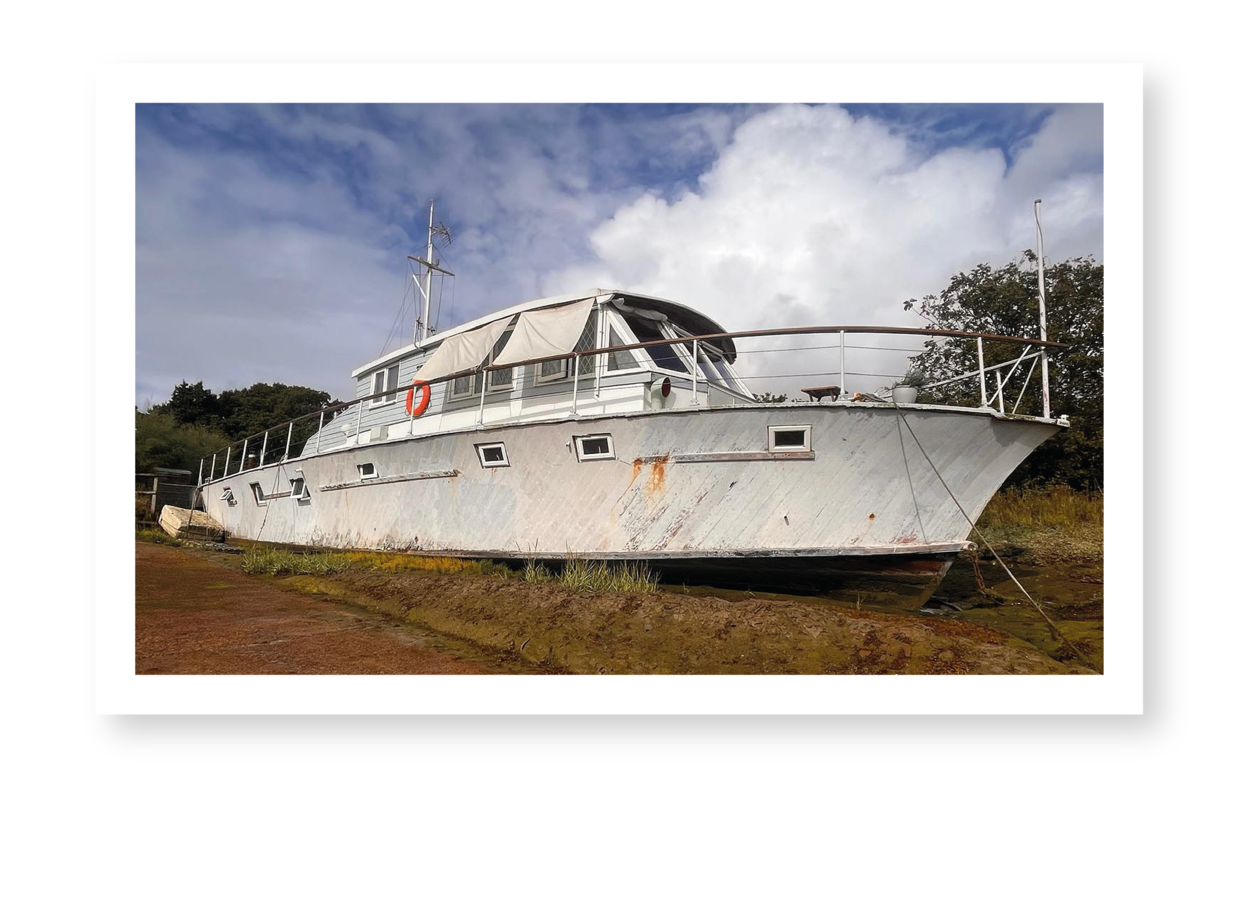
Fun fact: A fifteen-minute drive from the museum, you can spot an old Dutch Motor Torpedo Boat — HNLMS MTB 437. It now serves as a houseboat.
